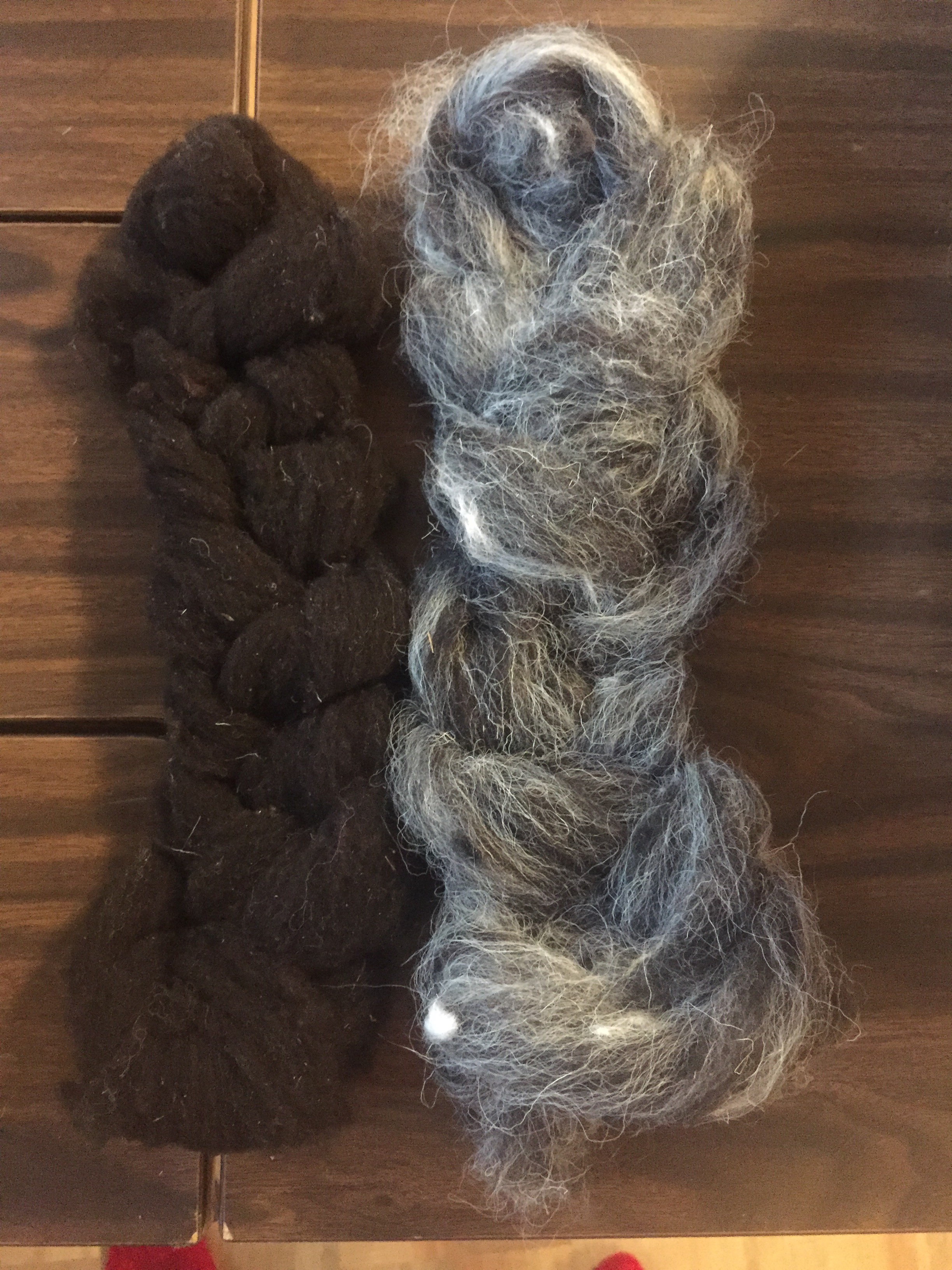

As you can imagine it takes a while to get from sheering sheep to wearing actual clothes and I have learned that pioneers must have taken great care of their clothing but at the same time it was probably much better/durable cloth than the commercial cloth we buy in the stores today. So much work is involved just to get enough cloth to even make an outfit and then the time involved to sew the outfit together afterwards… I can totally understand how having one set of work clothes and one set of church clothes was about all a family could produce in a year. Taking into consideration that families were much larger back then (yikes!!! making clothes for 12 kids, like this, would have been a mega chore!!!)
I started by washing and drying the wool (that was a previous post) to remove the dirt and lanolin. But that doesn’t remove small bits of hay and other tiny bits that have collected in the fur. Softer fur collects more gunk than coarse fur and this particular batch is extremely soft!!! Its gonna be a pain to process lol but so worth the effort! It’s gonna make some fabulous yarn and felted items!
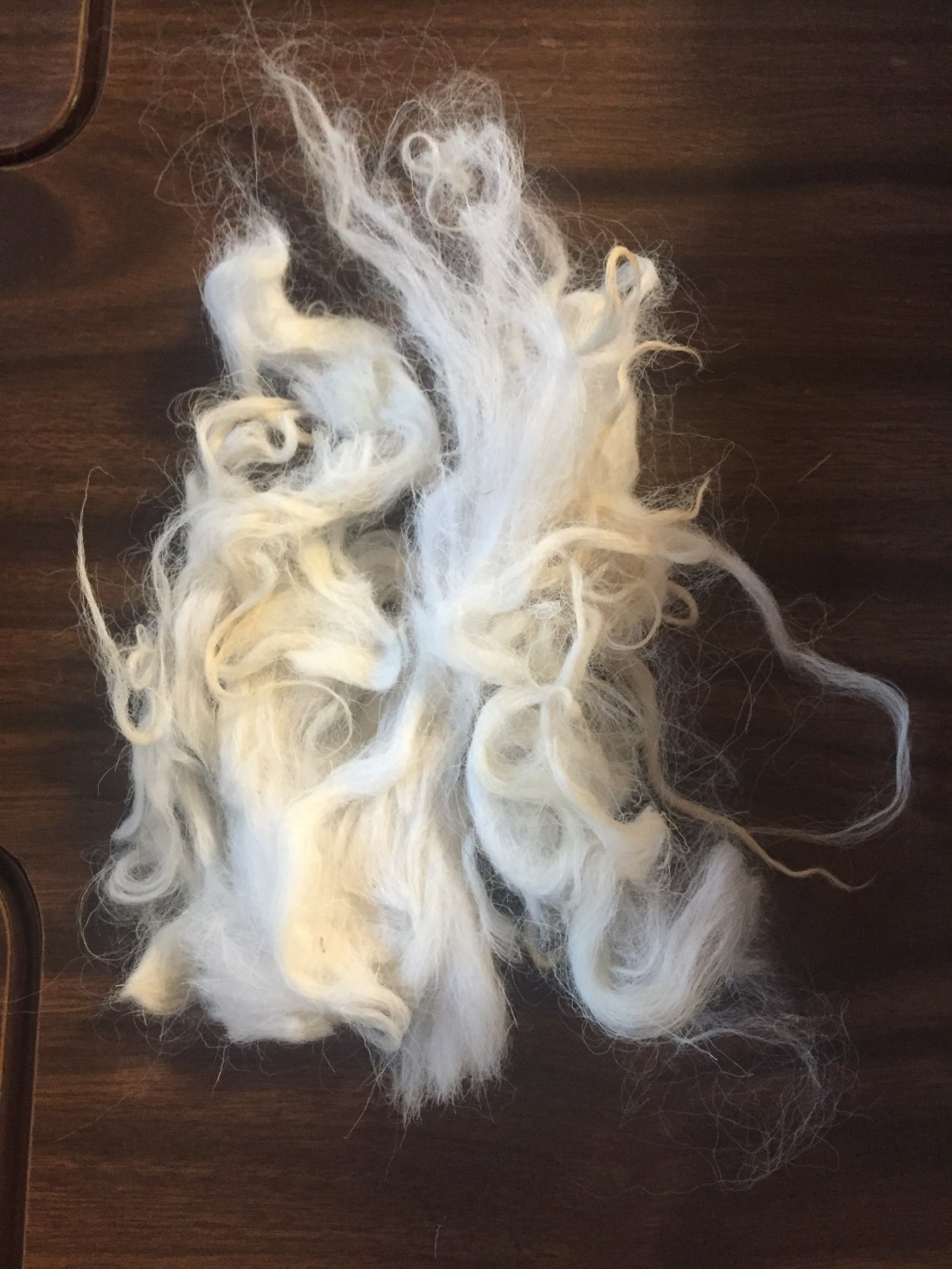
So here is the wool after being washed and dried. This is about a 10th of what I have left to wash and dry. Small batches is the trick, and remembering a small amount of wool goes a really long way! I have a 20qt storage container full of freshly washed and dried wool to get thru!
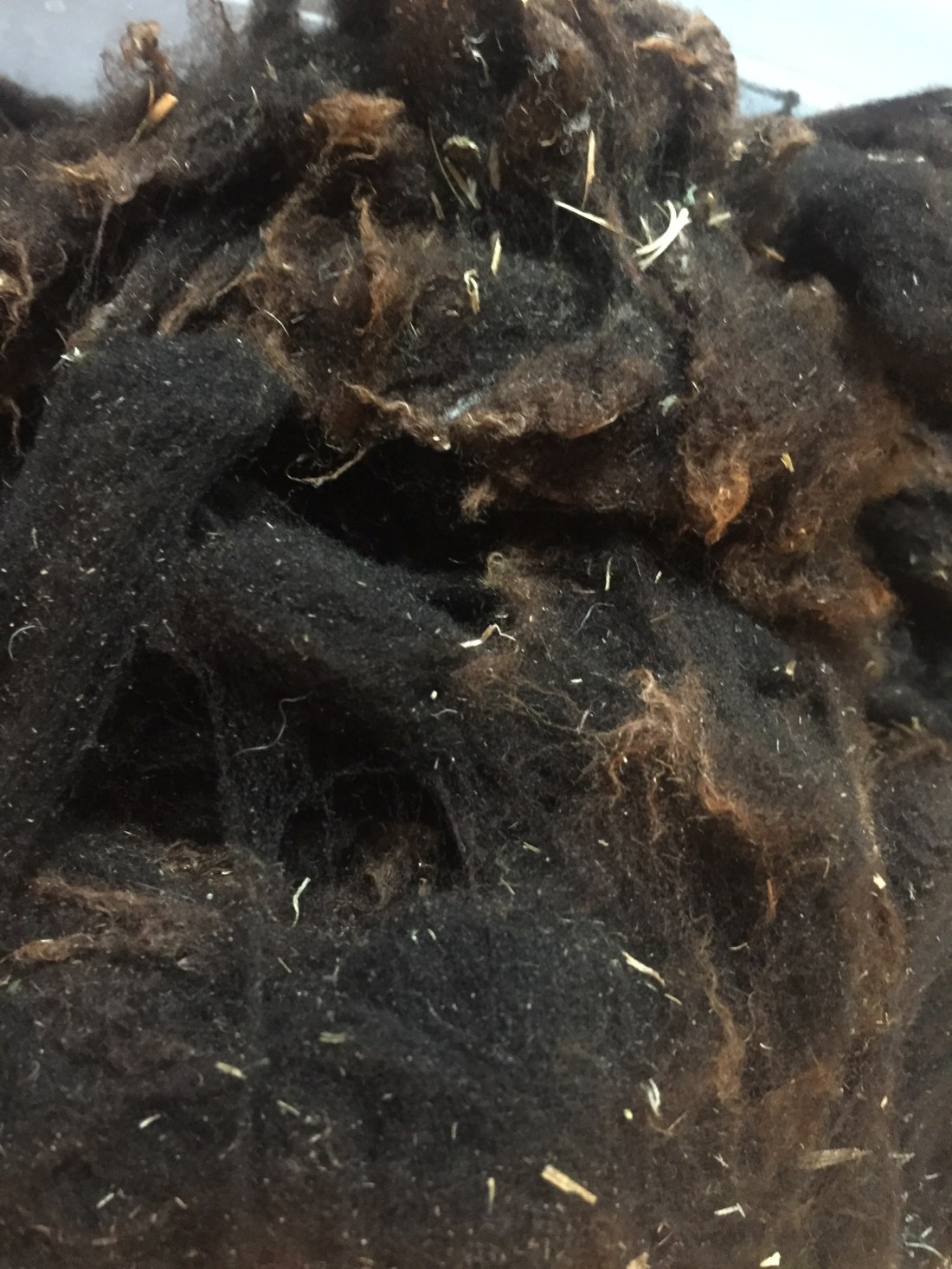
Lots of small bits and pieces in it as you can see, that I need to process out so that I can turn it into lovely, soft and sumptuous wool roving… which is what will be used for either felting or spinning into yarn.
I’m using a drum carder today. Back in pioneer days they would have used hand carders (which looks like a dog brush) but this drum carder will save me a bunch of time and tired arms. I just turn the handle and it does most of the work for me. Getting all those little bits of debris out of the wool similar to brushing your dog 🙂 larger drum carders have been around for commercial use since the late 1700’s but I don’t think these smaller versions for “Home” use have been around long. They are actually a simple machine, but to make one it’s quite expensive!
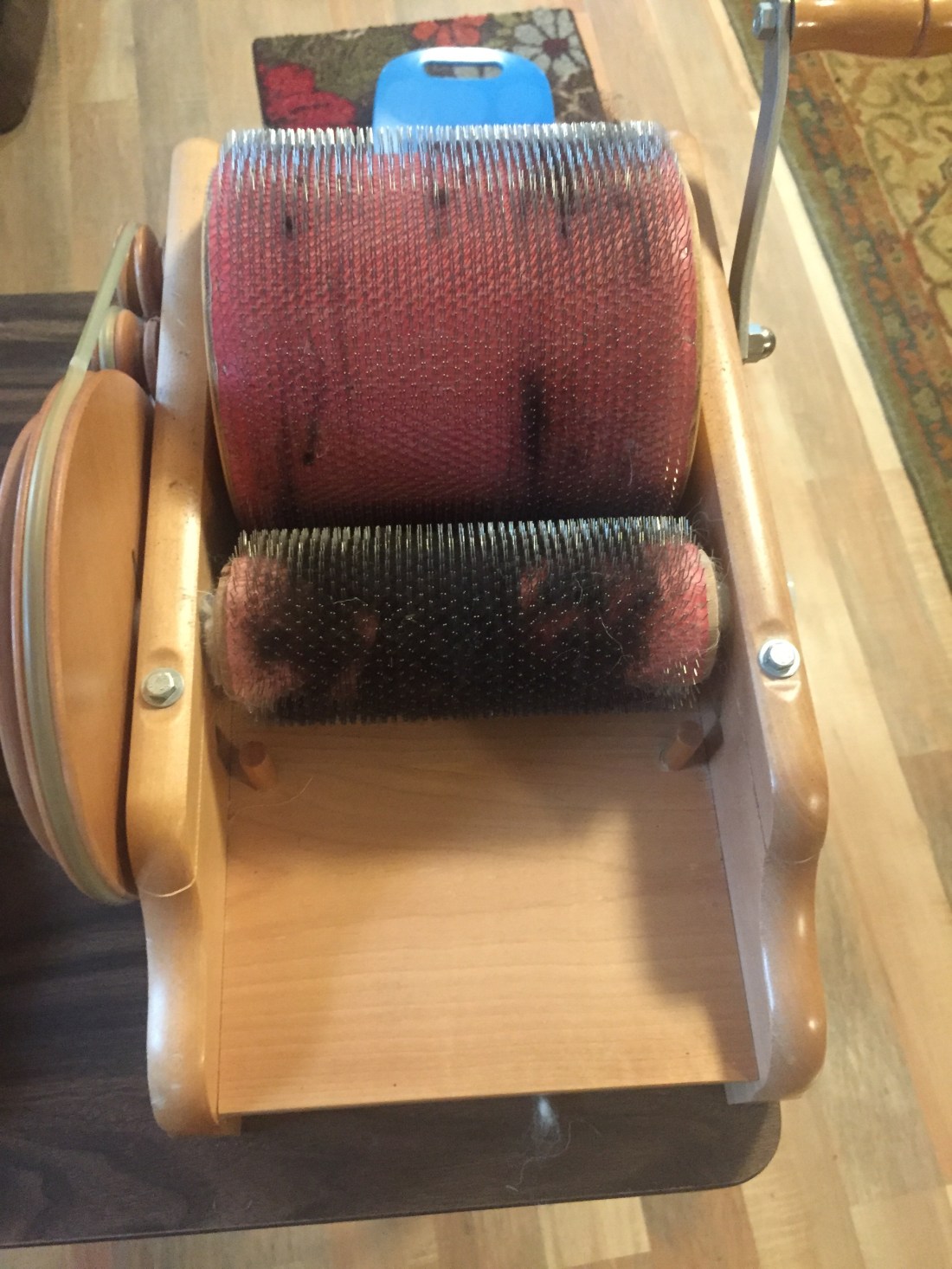
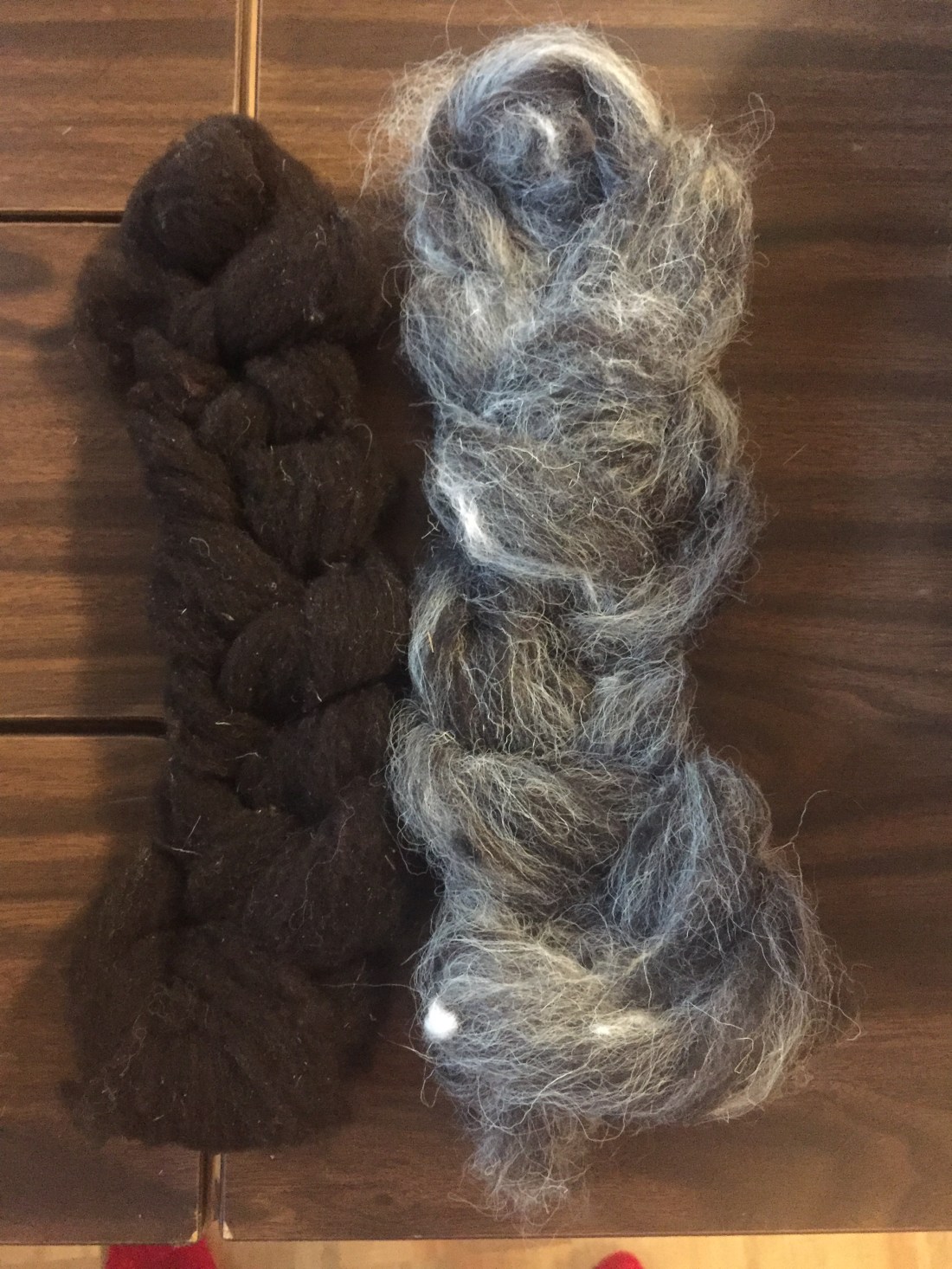
After I put a small amount of wool (about a small cereal bowl size worth handful) thru the drum carder and ran it thru 10 times, taking it off the back drum and running the wool thru the machine over and over again) it’s looking much better!
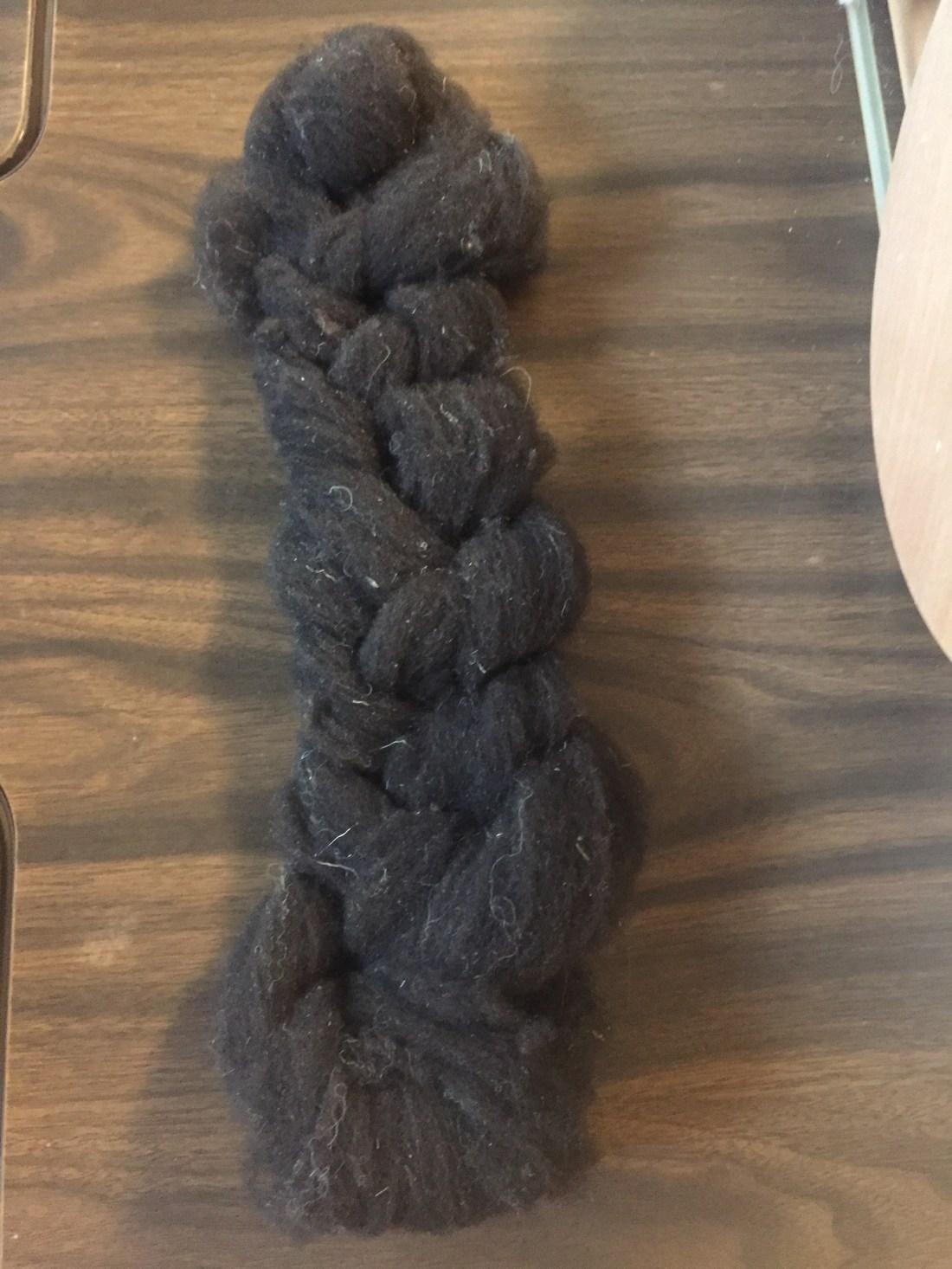
The white bits you see now are some white wool that I was carding before I switched over to carding the black. Some white fibers got transferred… but no big deal 🙂 … one small handful of wool complete, out of the big bucket of washed wool waiting to be carded. This could take a while! A good winter job, I may have to enlist the neighbors kids to help! Lol
Unlike a commercial processor, I will never be able to get out every single tiny bit of debris in the wool… it just isn’t going to happen! Besides I don’t want to chemically process this wool! This is all natural folks, done like our ancestors did it! I figure if they survived a bit of minuscule pieces of hay mixed in the yarn so can I Lol. It’s clean and sanitary and been combed as much as home processing can comb it. So now to start on my next handful…
By adding a handful of white churro wool to the black wool I get a lovely grey combination!
Conestoga Chuck says that thing looks too much like the dreaded dog brush, so he huffed and went to go lay down and take a nap while I work. It’s super cold outside and snowing a little bit so both he and lil bit are napping away the day… oh who am I kidding?!?!?! I took a nap too! There! I admit it! Lol we are all napping in between chores and crafting 🙂 I’m thinking a cup of hot chocolate is in order as well! Maybe that next handful of wool shall wait till tomorrow 🙂

 Conestoga Chuck