Since the first batch of soap didn’t seem to be curing properly, I got to thinking: “what am I doing differently from how the pioneers would have processed their soap?”
Then it came to me! They probably would have cured their soap in the cellar house /root cellar. The average temperatures for a cellar house depending on construction would have ranged from 40-65 degrees. So I have a mud room type entrance that is a basement entrance… so it is insulated but not actively heated. It’s also half underground, but it can get warm’ish during the day if it is sunny because we had lots of windows put into that space when it was built. However since it is winter it does stay cooler in that room (about 40 at night and 60 during the day unless it is a really sunny day). So it would be a perfect spot for curing soap! Not quite a cellar house but as close as I can get 🙂
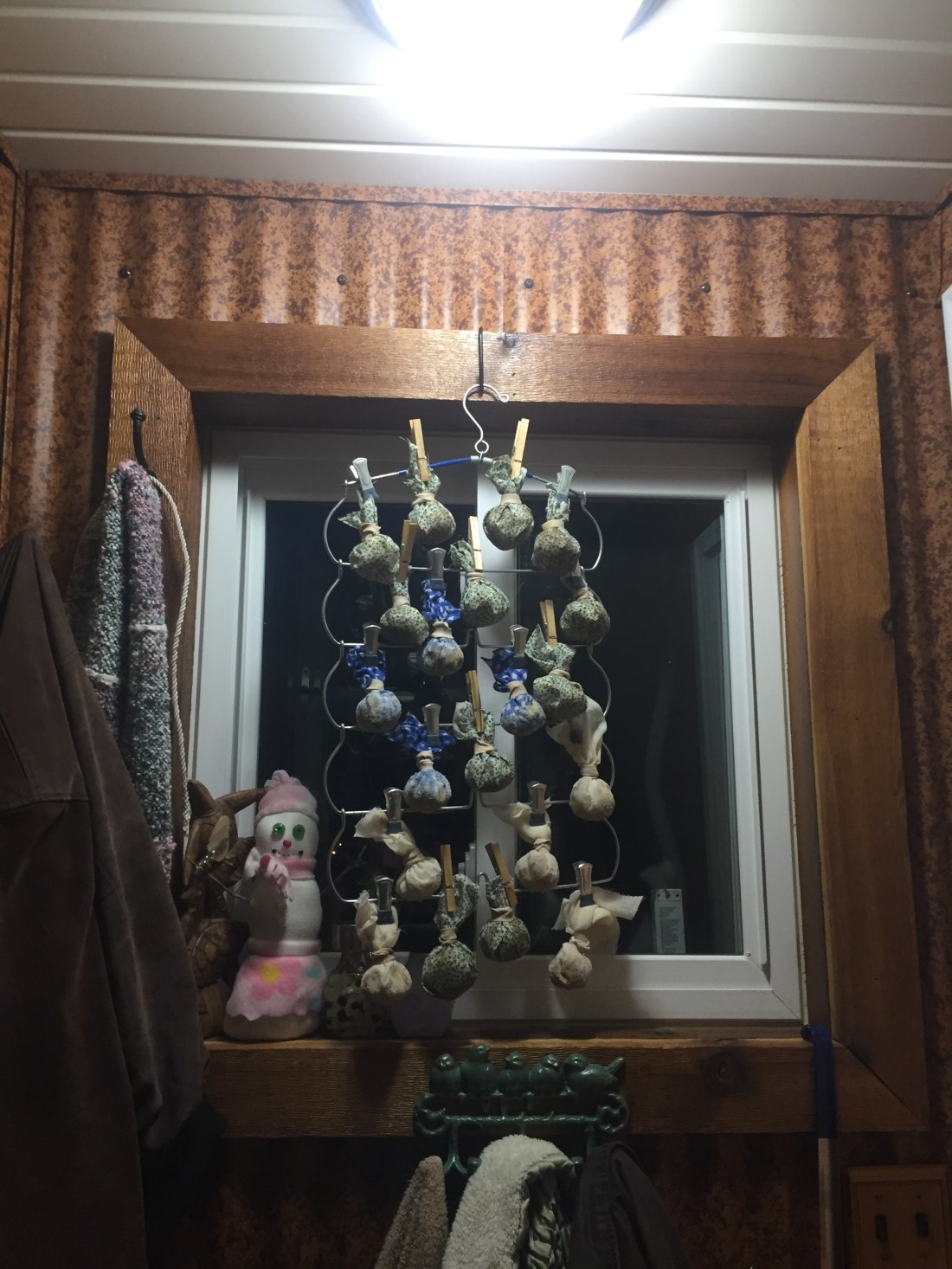
I also noticed the second batch is curing much nicer than the first batch and I think it’s due to a combination of three things:
1. I had processed the tallow and stored it in the freezer until I was ready to make a second batch, in a non sealing bowl. So perhaps the freezer helped to remove some moisture from the tallow?
2. The wood ash lye liquid… I made sure to boil down to condense it as much as possible to remove “water” before adding the tallow. I also let the entire mixture simmer on the stove longer to get as much water out during to “cooking process” as possible.
3. The second batch I used a bit more salt and I used dry herbs instead of fresh. Between the two it possibly soaked up and condensed out the “water” even more?
So after I had a good think about everything here is what I did:
I decided to roll the cloth curing bags for the first batch in some common table salt to try and pull as much moisture out of the soap as possible. Similar to curing a ham by burying it in salt. This seemed to help the first batch some. I then decided to take the soap out of the warm mechanical room environment and place it in the cold mud room environment. It’s not cold enough to freeze but cold enough the help “freeze dry” for lack of a better word lol.

Also the humidity here in Montana is very low. So low in fact that to sleep comfortably we normally have to run a humidifier in order to not wake up with cotton mouth! Not to mention dry skin conditions requiring lots of lotions lol. So by placing the soap in the mud room where the humidity is low (much lower than in the house) and the temperatures are much closer to a cellar house… I think I may have gotten the environmental conditions correct this time!
Surprising only after a week or so… both batches of soap have started to cure much better/faster and have started to become much more “cake” like vs play dough like texture. So environmental conditions really do account for as much of getting this process to work as the recipe itself. Maybe in summer or high humidity environments I would do the curing process in the fridge or freezer (lacking a cellar house lol) to try and get that environmental happy medium to work right.
I opened one of the soap bags that looked to have cured the best so far and fat it a poke and experimental touch test. We agree that it feels and smells like a very high lotion content type bar soap! So far so good at this stage. I have no idea how it will lather or work after the curing time is up but that will be the final test lol and the final update on this experiment.
I’m not expecting it to lather like a chemical commercial version of soap, simply because I have used homemade lye soap before lol. However the person who made that soap used commercial lye instead of wood ash lye which I’m assuming (since I’m not a chemist lol) wood ash lye is a much diluted version of the same highly concentrated commercially purchased chemical powdered version. Again, that’s part of the experiment! To make real pioneer soap from scratch with what is available from nature (not the local chemist lol) and to see how well it works.
I can say I have learned it is a bit of hit and miss, guesswork, due to environmental conditions and ingredients used. I would hazard a guess that each soap batch would turn out slightly different even if the same exact recipe was used… based on quality of ingredients and environmental conditions and processing times and other variable conditions. But it really is super fun to experiment and see what we get!

 Conestoga Chuck