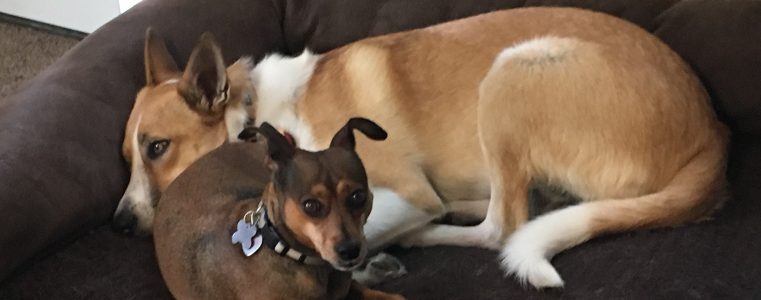
Thousands of Veterans use Service Dogs as part of their treatment for PTSD. Results of the use of PTSD Service Dogs is overwhelmingly positive. Countless Veterans report that they “owe their lives” to their PTSD Service Dogs. The VA, however, continues to resist the use of PTSDogs, stating in their official position, that “Clinically, there is not enough research yet to know if dogs actually help treat PTSD and its symptoms.” source
This position is hypocritical.
The VA prescribes the medication Prazosin (also known as Minipress) for treatment of nightmares due to PTSD. source This medication is not a psychological medication. It is a blood pressure medication. source During drug trials of Prazosin in Viet Nam era Veterans, the patients reported a reduction of nightmares as a side effect of the drug. The VA then developed a treatment protocol using Prazosin as treatment for PTSD related nightmares based on the patient reported outcome of the use of the drug.
When patients almost universally report the positive outcome of using a PTSD Service Dog, the VA falls back on their official position that there is not enough research, directly contradicting themselves when using their drug protocol for Prazosin as an example.
Why isn’t the VA conducting the research they say they are lacking? There at least one study going on that is showing positive results: https://www.purdue.edu/newsroom/releases/2018/Q1/study-shows-service-dogs-are-associated-with-lower-ptsd-symptoms-among-war-veterans-.html
Will the VA accept this research?
The bottom line, in my opinion, is that the VA is no longer in the business of actually helping Veterans recover. The VA bureaucracy has become so bloated and byzantine (the VA has the second largest budget in the U.S. government, right behind the Department of Defense), that the purpose of its existence has become solely to perpetuate itself. If the VA truly wanted to combat Veteran suicide, it would be embracing any treatment protocols possible. The VA already sends Veterans to equine therapy, acupuncture, EMDR therapy, and various other “alternative” treatment methods, but the VA is adamantly resisting the one method many, many Veterans report works: the PTSDog.
Thankfully, this is America, and as citizens, Veterans are protected by the Americans with Disabilities Act. Although the VA resists the treatment we know helps, they can not prevent Veterans from pursuing the use of a PTSD Service Dog themselves, and finding the healing and growth they need as they recover from PTSD.
Learn more about the ADA and PTSD Service Dogs in the book PTSDog: Post Traumatic Stress Disorder and the Service Dog, available at booklocker.com, amazon.com and barnesandnoble.com.

 Conestoga Chuck