So if you have read my previous articles you know we love to work camp in exchange for a free camping spot. We like to do fiber arts demonstrations at historical areas as our work camping volunteer job. Things like spinning wheel, drop spindle, weaving, washing/carding/dying wool, sewing, knitting, crochet… basically anything fiber related. But this little antique rope making machine is always a hit with the kids. I remember when my own kids were little they did a rope making sample at a park and as grown adults with kids of their own and after multiple household moves… they still have that small piece of sisal rope they made! Who doesn’t need a piece of really good rope at some point in life? And if you make it long enough you can have a jump rope competition afterwards with the kids lol.
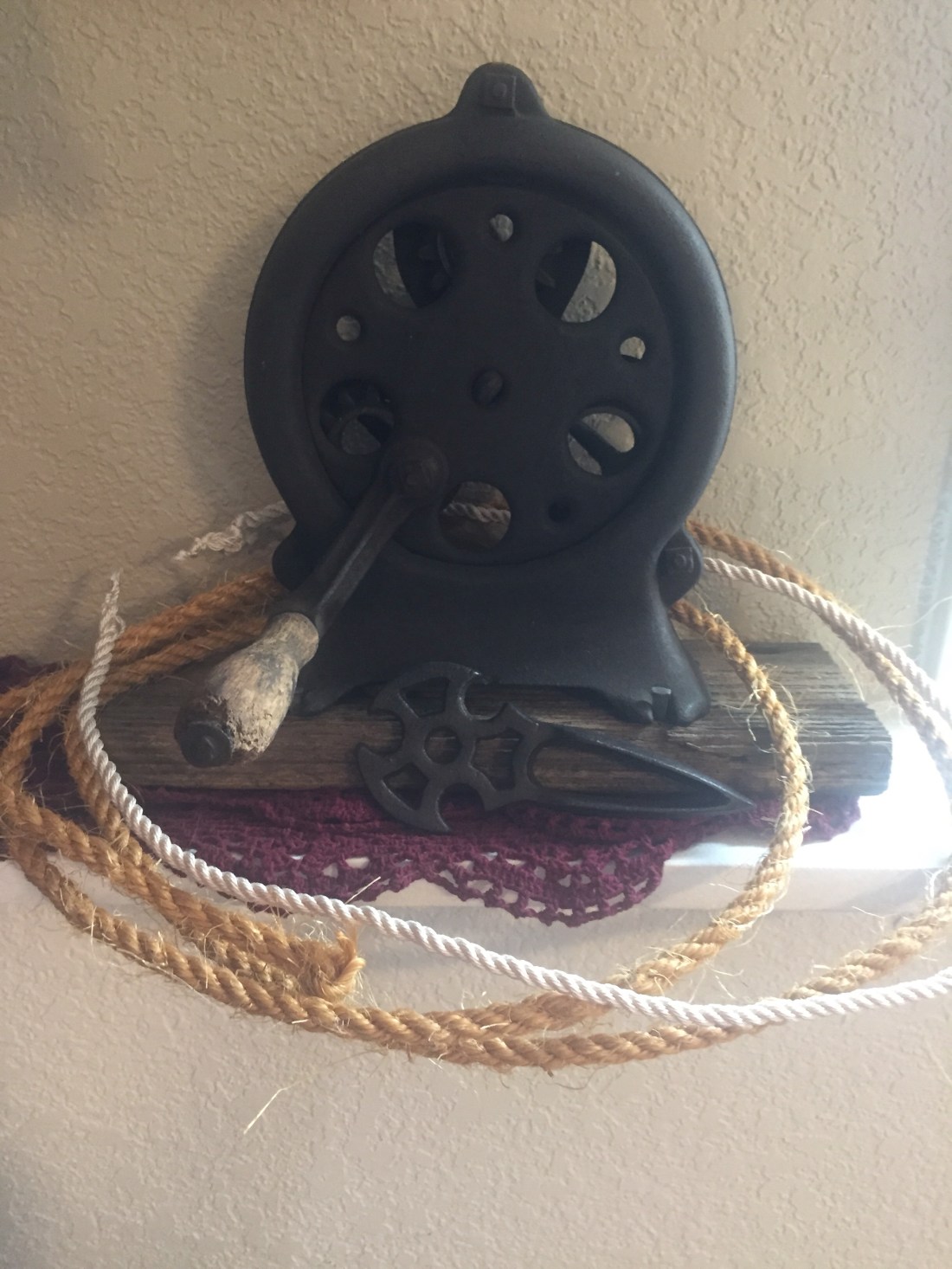
So let’s start with a little history of this machine and rope making first. Rope making has been around for a very long time! It started with early humans hand twisting fibers (like tall grasses) together. Then someone got smart and built a homemade rope making machine (wood with wood gears). Then someone even smarter figured out how to make cast iron, and the rope making machine you see in the photo was thus developed in the early 1900’s. Every farm and business that needed rope basically had (or made a homemade version) of this dandy little machine because (it is) and was much cheaper to make your own rope than buy the ready made stuff. Honestly my friends and I believe that the quality of the rope made on these machines is of much better quality and tensile strength than the store bought stuff anyway. Rope (historically) was a mega important tool on the farm (and in many businesses) once upon a time, and nobody would want to stop work just to have to ride into town to buy a new rope because their rope broke and waste a good days work. Not being able to get summer chores done back then could mean the difference between surviving the winter and certain death.
There are tons of videos and “how to” DIY instruction pages already on the internet on how to use these machines (and make your own) so I won’t go into those details here. They are pretty simple to figure out. What I want to discuss is using them and other fiber arts items to work camp!
Obviously in an RV… space is at a premium, but having a skill to trade for a free camping spot (so you don’t have to clean toilets or mow grass) is worth taking these items along on your travels (financially) and it’s rewarding and fun to do! This rope maker is small and can easily be stored in a cabinet. Take it out and clamp it on a sturdy picnic table (lots of those in a campground already) and you are set up to do demonstrations. You can easily find twine locally at any hardware store (or thrift store or dollar store etc) and it’s not very expensive (often the place you are doing the demonstrations for will buy the twine for you). You can use traditional sisal or get fancy and use nylon or cotton and even bright colors. If you want to get fancier yet and do some more historical demonstrations… pass the sisal rope over a flame (like a candle) after making it in order to burn off the tiny bits that are sticking out and then rub the rope with a bar of beeswax (I get mine from the honey vendor at the local farmers market) to make a traditional style cowboy rope (for roping horses and cattle etc) and have a roping contest.
When the kids see this machine as you start to do your very first demonstration… it’s like pied piper and his flute is sitting on your shoulder playing his famous tune… they seem to flock over and amazingly they pay attention, wait their turn patiently, listen attentively to what you are saying and actually learning about how to make rope! The adults really get in to it sometimes too lol. I always stress that they are making rope on a machine that is well over 100 years old and works just as good as the day is was first purchased brand new! Which always gets a great reaction.
Now with all that said, it’s much easier to do rope making demonstrations if you have an assistant to help. It really takes at least two people (plus the kid) to make a piece of rope. One to turn the handle. One to move the tool down the rope as the handle is being turned… and the kid holding the end of the rope as it is getting twisted together. (Watch the online videos on how to use the machine and you will see what I mean) so grab your spouse or another volunteer or one of the parents to help you out on this one.
Honestly it really is great fun! And if you need a piece of rope for your RV you can always make exactly what you need! To me it is worth taking my fun fiber arts toys with me on my travels and finding space for them (even if it means I have to leave something else at home). I was going to play with them anyway so why not get a free camping spot for letting people watch what I’m doing and teach them a little history and maybe, just maybe, inspire the next generation of fiber artists? Some of these skills are a dying art, but so very useful to know! Also… if I need an extra emergency dog leash for Conestoga Chuck I can make him one!
There are so many fun possibilities with this little antique device and it really does not take up much room. A true antique one can be rather expensive (around $300) unless you are lucky enough to find one in a thrift store or garage sale lol. But you can also make one easily enough for about $30-50 max. They also sell wooden versions online for $80- 100. So keep your eyes out for one if you find this an exciting prospect.
Stay tuned for future articles and I will talk about work camping with other fiber arts equipment and supplies, small and large.

 Conestoga Chuck